Do Fibre Colon-Cleanse Supplements Actually Work? What the Evidence Shows
"Colon cleanse" is one of the most oversold phrases in the supplement aisle. It conjures an image of scrubbing years of residue out of the gut. That image is wrong — but that does not mean the fibres inside these products do nothing. The honest picture sits in between, and it is worth understanding before you spend anything.
Do fibre colon-cleanse supplements actually work?
Partly. They do not flush out hidden toxins or built-up residue — a healthy colon does not work that way. What they genuinely offer is a modest dose of dietary fibre from psyllium, oat bran, apple pectin and flaxseed, which can support regularity when taken consistently with enough water. The catch is dose: a capsule delivers far less than the gram-level intakes studied.
The claim vs the biology
A healthy colon is not a clogged pipe. It continuously renews its lining and moves contents along on its own; it does not accumulate a toxic crust that a capsule dissolves. Major medical sources are consistent on this: routine "detox" and "cleanse" products have little evidence for removing toxins, and the body's liver, kidneys and gut already do that job. So if a product's pitch rests on flushing out hidden sludge, treat that as marketing.
What the fibres can genuinely do
Where these products earn their keep is simpler and less dramatic: they add dietary fibre, and most people do not get enough. The fibres commonly used — psyllium, oat bran, apple pectin, flaxseed — fall into two useful groups.
Bulking fibre (psyllium, flaxseed)
Psyllium is the best-evidenced of the group. It absorbs water, forms a gel and adds stool bulk, and it has strong clinical support for improving regularity and stool consistency — which is why it is a first-line recommendation for constipation in mainstream medicine. It also has evidence for supporting healthy cholesterol. Ground flaxseed adds soluble and insoluble fibre plus lignans, and supports regularity in diet studies.
Prebiotic fibre (oat bran, apple pectin)
Oat bran's beta-glucan has an authorised health claim for maintaining normal blood cholesterol as part of a balanced diet. Apple pectin is a genuine prebiotic: it feeds beneficial gut bacteria, which over weeks can support a healthier microbiome balance. These effects are real but gradual, and they depend on consistent intake.
The catch nobody prints in bold: dose
Here is the part that matters most for a capsule product. The benefits above are demonstrated at gram-level intakes — several grams of psyllium a day, three grams or more of oat beta-glucan. A once-daily capsule typically delivers a fraction of that. So a fibre capsule is best understood as a modest daily top-up that supports a fibre-rich diet, not a replacement for one. If your diet is already low in fibre, adding beans, oats, fruit and vegetables will move the needle far more than any capsule.
| Fibre | Best-supported benefit | Typical study dose vs a capsule |
|---|---|---|
| Psyllium husk | Regularity, cholesterol | 5–10 g/day — capsule gives a fraction |
| Oat beta-glucan | Cholesterol maintenance | ~3 g/day — capsule gives a fraction |
| Apple pectin | Prebiotic / microbiome | Grams in studies — capsule is a top-up |
| Flaxseed | Regularity, fullness | Tablespoon+ in trials — capsule is small |
Using a fibre supplement sensibly
- Drink water. Fibre without enough fluid causes bloating, not relief. This is the single most common mistake.
- Start low, expect gas. The first week or two often brings more wind while your gut adapts. That is normal and usually settles.
- Give it weeks. Regularity may improve in days; microbiome shifts take longer. Judge it fairly.
- Mind your medicines. Fibre can slow absorption of some drugs — separate them by a couple of hours and ask a pharmacist.
Where FloraNew fits
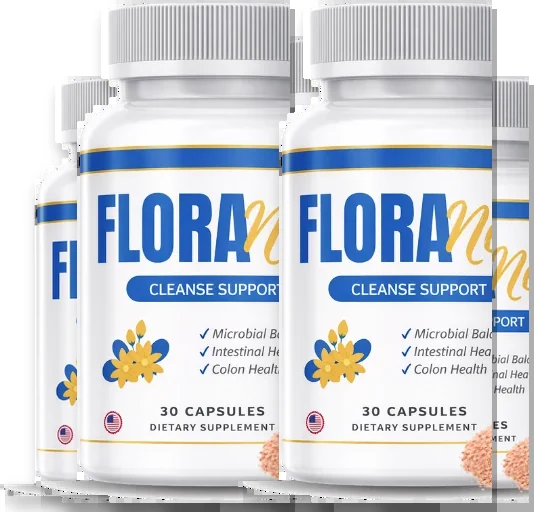
FloraNew combines exactly these four fibres in a single daily vegetarian capsule. That makes it a convenient, gentle way to add a little fibre — genuinely preferable to a stimulant "detox" tea that cramps the bowel. Just hold it to realistic expectations: it is a daily fibre top-up with a 60-day guarantee, not an overnight cleanse. If you want to try it, the official-store pricing is here.
References
Frequently asked questions
Do colon-cleanse supplements remove toxins from the body?
No. A healthy colon does not accumulate a toxic crust that a capsule dissolves, and major medical sources find little evidence that detox or cleanse products remove toxins. Your liver, kidneys and gut already handle that job continuously. What a fibre-based product genuinely offers is added dietary fibre, not a flush.
Is a fibre capsule as good as eating high-fibre foods?
Usually not on its own. The benefits of fibre in studies come from gram-level intakes, while a once-daily capsule typically delivers a fraction of that. A capsule is best seen as a modest top-up alongside a fibre-rich diet. Adding beans, oats, fruit and vegetables will move the needle far more than any single capsule.
How much water should I take with a fibre supplement?
Take fibre with a full glass of water, and keep fluid intake up through the day. Fibre works by absorbing water to form bulk and gel; without enough fluid it can cause bloating and even constipation rather than relief. Drinking adequately is the single most common step people skip when starting fibre.
How long before a fibre supplement improves regularity?
Regularity can improve within a few days, while any prebiotic effect on the gut microbiome develops more gradually over weeks. Expect a settling-in period of extra gas in the first week or two as your gut adapts. Give it consistent daily use for several weeks before judging whether it helps you.
A simple daily fibre top-up
FloraNew pairs oat bran, apple pectin, flaxseed and psyllium in one vegetarian capsule — a gentle way to add a little fibre, with a 60-day money-back guarantee.
 Order Now