Best Fibre for Bloating: Soluble vs Insoluble

Which fibre is best for bloating?
For bloat-prone women, soluble fibre such as psyllium is usually the gentler choice: it forms a soft gel, draws in water and adds bulk without the coarse scratch of bran. Insoluble fibre speeds transit but can feel harsh at first. Whatever you pick, add it slowly and drink more water.
- Soluble fibre (psyllium, oats, pectin) dissolves into a gel and is usually easier on a sensitive gut.
- Insoluble fibre (wheat bran, skins, seeds) adds bulk and speeds transit but can worsen gas if you ramp up fast.
- Increase either type by a few grams per week, not all at once, and match it with extra fluid.
Fibre and bloating have a complicated relationship. Fibre is one of the best tools for keeping digestion regular, yet the wrong type — or the right type added too fast — is a classic trigger for a swollen, gassy middle. If you have ever "eaten healthier," piled on the bran and salad, and felt worse by mid-afternoon, you have met this paradox first-hand. The good news is that it is fixable once you understand what the two families of fibre actually do inside you.
Soluble vs insoluble: what the words mean
All dietary fibre is plant material your small intestine cannot digest, but it splits into two functional groups by how it behaves in water.
Soluble fibre dissolves. In the gut it soaks up fluid and turns into a soft, viscous gel. That gel slows digestion slightly, softens stool, and gives your gut bacteria something to ferment slowly. Psyllium husk, oat beta-glucan, apple pectin, the fibre in beans, and the inner flesh of fruit are all soluble sources.
Insoluble fibre does not dissolve. It stays largely intact, adding physical bulk and acting a little like a broom that speeds material through the colon. Wheat bran, the skins and seeds of fruit and vegetables, and wholegrain husks are the main insoluble sources. Most real foods contain a blend of both, but the ratio is what changes how your gut feels.
Why soluble fibre is usually gentler for bloat-prone women
If bloating is your main complaint, soluble fibre is the sensible starting point for three reasons. First, the gel it forms holds water in the stool, which keeps things soft and moving rather than dry and stalled — and constipation itself is a leading cause of bloating. Second, that same gel tends to move smoothly rather than scraping, so it is more comfortable for a reactive gut. Third, psyllium in particular is unusually well behaved: it is only partly fermented, so it delivers the bulking benefit without generating as much gas as the highly fermentable fibres.
Psyllium has the strongest clinical track record of the group. It is a first-line recommendation in mainstream medicine for improving regularity and stool consistency, and it works from both directions — firming up loose stool and softening hard stool. For a woman whose bloating comes and goes with sluggish digestion, that predictability is exactly what you want.
Where insoluble fibre still earns its place
None of this makes insoluble fibre the villain. Its bulk-and-speed effect is genuinely useful if your problem is slow transit rather than sensitivity, and wholegrains, vegetable skins and seeds bring vitamins, minerals and plant compounds that a supplement cannot replace. The issue is rarely insoluble fibre itself — it is the amount and the speed of the increase. A sudden jump from a low-fibre diet to a bran-heavy one gives your gut bacteria a feast they are not yet equipped to handle, and the by-product is gas.
So the practical takeaway is not "avoid insoluble fibre forever." It is "lead with soluble, keep insoluble in the mix, and change nothing quickly."
Comparing the two at a glance
| Feature | Soluble fibre | Insoluble fibre |
|---|---|---|
| Behaviour in water | Forms a soft gel | Stays intact, adds bulk |
| Main effect | Softens stool, slows digestion | Speeds transit, adds volume |
| Typical sources | Psyllium, oats, pectin, beans | Wheat bran, skins, seeds |
| Tolerance if you bloat | Usually gentler | Can feel harsh if added fast |
| Best starting point | Yes, lead with this | Add gradually alongside |
The real culprit: too much, too fast
Here is the fact that reframes most "fibre made me bloated" stories: it is very often the pace of the change, not the fibre. Your gut microbiome adapts to what it is regularly fed, and that adaptation takes days to weeks. Double your fibre overnight and the bacteria ferment the surplus enthusiastically, producing the gas that leaves you distended. Give the same population two to four weeks to adjust and the gas usually settles to a normal level. This is why the single most useful instruction in this whole article is not about which fibre — it is slow down.
A gentle ramp-up plan
- Start small. Add roughly three to five grams of fibre at a time, not a big scoop on day one.
- Hold, then step up. Stay at each level for three to five days before increasing again, so your gut can catch up.
- Drink more water. Soluble fibre needs fluid to form its gel; without it, fibre can constipate and bloat rather than relieve.
- Split the dose. Spreading fibre across meals is easier to tolerate than one large serving.
- Move your body. Even a daily walk helps move gas through and supports regularity.
A note on fermentable fibres and your cycle
Some soluble fibres are also highly fermentable — inulin and chicory root are common examples added to "gut health" products. They are legitimately good prebiotics, but they are among the most gas-producing fibres, so a bloat-prone gut may not love a big dose straight away. If a labelled fibre supplement leaves you gassier than expected, check whether inulin is high on the ingredient list. It is also worth remembering that hormonal shifts across the menstrual cycle change fluid retention and gut motility, so some bloating is cyclical rather than dietary. Tracking when your bloating peaks helps you separate a fibre issue from a hormonal one.
Where FloraNew fits
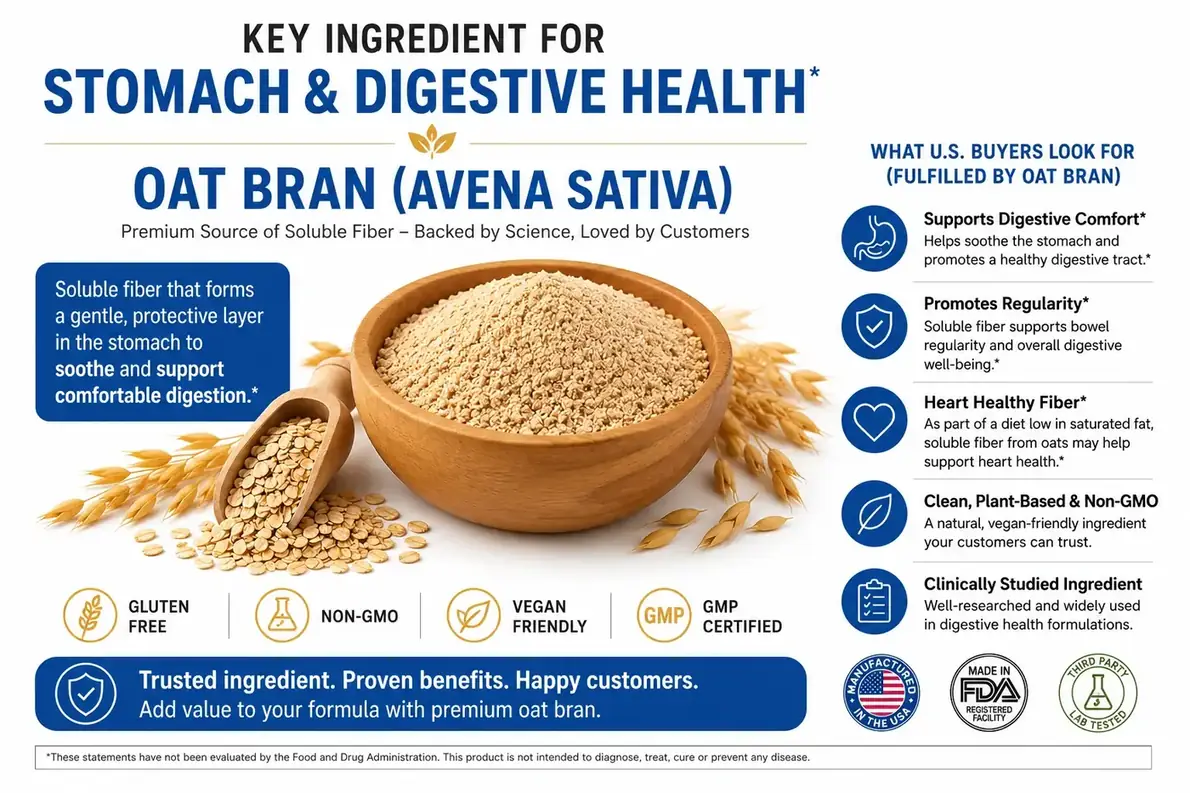
If you want a simple way to lean your intake toward gentle, gel-forming fibre, FloraNew combines psyllium, oat bran, apple pectin and flaxseed in one daily vegetarian capsule — a soluble-leaning blend rather than a coarse bran product. Treat it as a measured daily top-up on a fibre-rich diet, introduce it slowly like any fibre, and take it with a full glass of water. Held to realistic expectations, it is a convenient way to nudge your fibre balance in the direction most kind to a bloat-prone gut.
References
Frequently asked questions
Which fibre is best if I bloat easily?
If you bloat easily, start with a soluble, gel-forming fibre such as psyllium husk. It is generally better tolerated than coarse insoluble fibre because it holds water and moves smoothly. Begin with a small dose, take it with plenty of water, and build up over two to three weeks.
Is soluble or insoluble fibre gentler?
Soluble fibre is usually the gentler option for a sensitive gut. It dissolves into a soft gel that softens stool and eases transit, while insoluble fibre from bran and seeds is coarser and can feel harsh if you add too much too quickly. Most people do best with a mix, weighted toward soluble at first.
Can too much fibre cause bloating?
Yes. Adding fibre faster than your gut bacteria can adjust to often causes gas, cramping and bloating. This is common in the first week or two and usually settles. The fix is to slow down: reduce the dose, hold it steady for a few days, and drink more water before increasing again.
How do I add fibre without gas?
Add fibre gradually, roughly three to five grams every few days rather than a big jump. Split it across meals, always take it with water, and favour soluble sources early on. Staying active and giving your microbiome two to four weeks to adapt makes the transition far more comfortable.
Related reading
Want a soluble-leaning fibre blend in one capsule?
FloraNew brings psyllium, oat bran, apple pectin and flaxseed together in a single daily vegetarian capsule — introduce it slowly, take it with water, and check current availability and the 60-day guarantee at the official store.
Order Now