Probiotics for Bloating: Do They Really Work?
Do probiotics for bloating actually work in women?
Often, yes — but modestly and strain by strain. In a review of more than 60 trials, roughly 60% of IBS patients reported meaningful bloating relief from targeted probiotics. The strongest randomised evidence favours B. longum 35624, L. plantarum 299v and Bacillus coagulans, taken daily for three to four weeks.
- Best-studied strains: B. longum 35624, L. plantarum 299v, Bacillus coagulans.
- Give it three to four weeks of daily use before judging.
- A little extra gas in week one is normal, then it settles.
If you have ever finished a normal meal and watched your waistband disappear anyway, you are the reason "probiotics for bloating" is one of the most searched phrases in women's digestive health. Bloating is the number-one gut complaint women bring to the pharmacy shelf, and probiotics are the number-one thing they reach for. The honest question is whether the two actually meet in the middle — whether swallowing a capsule of live bacteria really flattens that end-of-day swell, or just flattens your wallet. The short answer is that some probiotics genuinely help, some do nothing, and the difference comes down to a detail the marketing usually hides: the strain.
Do probiotics for bloating really work? What the trials show
Let us start with the number that gets quoted most. When researchers pooled more than 60 randomised trials of probiotics in people with irritable bowel syndrome — the group most defined by bloating and gas — around 60% of patients reported significant improvement in their symptoms compared with placebo. That is a real, repeatable signal, and it is why gastroenterology guidelines no longer dismiss probiotics out of hand. But two caveats keep it honest. First, the placebo response in bloating trials is unusually large, because bloating fluctuates day to day and people who expect relief often feel it. Second, the benefit was concentrated in specific, named strains. Lumping every "probiotic" together is like judging every "pill" by aspirin: the category tells you almost nothing.
So the accurate framing is not "do probiotics work for bloating" but "do these probiotics work." When you narrow it to the strains that were actually tested for bloating and gas, the results look considerably better than the blurry category average. When you widen it back out to bargain-bin blends labelled only "50 billion CFU, 10 strains" with no strain codes, the results collapse toward placebo. That single distinction explains most of the confusion online, and it is the lens for everything below.
Why women bloat more — and why that matters here
Bloating is not evenly distributed. Women report it more often than men, and there is ordinary physiology behind that, not a character flaw or a lack of willpower. Female sex hormones shift across the menstrual cycle, and the luteal phase in particular slows gut motility and encourages water retention, which is why so many women feel puffiest in the days before a period. Transit time — how long food takes to travel the whole gut — tends to be longer in women on average, giving bacteria more time to ferment residue into gas. Layer on the fact that women are more likely to be diagnosed with IBS, and you have a population primed to notice bloating and to go looking for something that helps.
None of that is a disease in itself; it is normal variation. But it does mean the same probiotic trial can produce a bigger effect in women than the headline average suggests, and it means the levers that reduce fermentation and speed transit — fibre, fluid, movement and, yes, the right bacteria — are especially worth getting right.
The strains with the strongest evidence
This is the part worth reading twice, because it is the part that determines whether your money buys results or a placebo. Benefit in probiotics is strain-specific. Two bottles can both say "contains Lactobacillus" and behave completely differently, because the strain — the exact genetic line, identified by a letter-and-number code — is what was studied. Three strains have the best randomised evidence specifically for bloating and gas.
Bifidobacterium longum 35624
Originally isolated from a healthy human gut, B. longum 35624 is one of the most studied single strains in IBS. In controlled trials it reduced abdominal pain, bloating and bowel-habit dissatisfaction more than placebo, and it has a reassuring safety record. It is the closest thing the field has to a reference strain for bloating, which is why you will see it cited in almost every serious review.
Lactobacillus plantarum 299v
L. plantarum 299v has repeatedly outperformed placebo for bloating and abdominal discomfort, and it survives stomach acid well, which matters because a strain that dies on the way down cannot help. It is a strong pick for the person whose main complaint is gas and pressure rather than irregularity.
Bacillus coagulans
Bacillus coagulans is a spore-forming strain, meaning it is naturally armoured against heat and acid and tends to arrive in the colon intact. Trials link it to less bloating and abdominal pain, and its ruggedness makes it forgiving of imperfect storage — a practical advantage over more fragile strains.
| Strain | Best-supported effect | Honest caveat |
|---|---|---|
| B. longum 35624 | Less bloating, pain and discomfort in IBS | Effect is modest; not a cure |
| L. plantarum 299v | Less gas and abdominal pressure | Works best when gas is the main issue |
| Bacillus coagulans | Less bloating; survives acid well | Fewer head-to-head trials than B. longum |
| Unnamed "10-strain blend" | Unknown | No strain code means no evidence |
The practical takeaway is simple: read the label for the full strain designation, not just a species name or a headline CFU count. A named, tested strain at a sensible dose beats a giant colony count of anonymous bacteria almost every time. If you want to see how this compares with an entirely different mechanism, our breakdown of how digestive enzymes compare with probiotics for women covers when each tool actually earns its place.
Before we go further: if the evidence above has convinced you that a fibre-first foundation is the sensible place to start, you can check current FloraNew pricing and availability here and read the exact label. We will explain precisely where it fits — and where it does not — a little further down.
What to expect: a realistic bloating timeline
The single biggest reason people conclude "probiotics don't work" is that they quit too early. Probiotics are a slow-burn intervention: they shift the microbial balance gradually while you keep taking them, so a single dose does nothing overnight. Here is a fair timeline built from how the trials were actually run.
- Days 1–7: You may notice a little more gas or bloating, not less. This is normal as the gut adjusts. Take it with food and, if the strain allows, start at a lower dose.
- Weeks 1–3: The transition period. For most people the early gas settles and the first genuine reductions in end-of-day bloating begin to show.
- Weeks 3–4: The window where trials measured benefit. If a strain is going to help you, this is usually when it becomes obvious.
- After 4 weeks: Your verdict point. No meaningful change with consistent daily use means this strain is probably not your strain — switch, rather than doubling down.
Three myths worth clearing up
Myth 1: probiotics flatten bloating overnight. They do not, and any product promising a same-day "debloat" is selling a feeling, not a mechanism. Real strain benefit builds over weeks. If you want a genuinely fast lever, reducing carbonated drinks, eating more slowly and cutting back on sugar alcohols move the needle in hours — probiotics are the longer game underneath.
Objection: "I tried probiotics and they made me MORE bloated." This is real and it is common, and it does not mean probiotics failed you. A short-lived uptick in gas during the first one to three weeks is the microbiome adapting, and for most people it eases. The fix is rarely to quit on day three; it is to lower the starting dose, take it with a meal, and give the adjustment period a chance to pass. If it is still worsening after three to four weeks, that particular strain simply is not a match — which is useful information, not a verdict on the whole category.
Myth 2: more CFUs mean more relief. Colony-forming units are a measure of quantity, not quality. Beyond the dose used in the trials, piling on billions more of an unstudied strain does not buy extra benefit — it just buys a bigger number for the front of the box. A named strain at its tested dose beats an anonymous mega-count.
Where prebiotic fibre — and FloraNew — fit
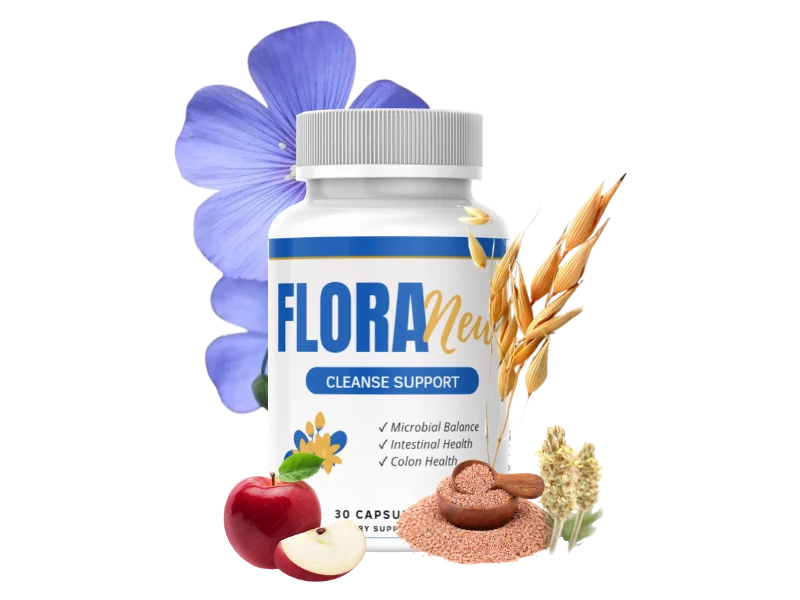
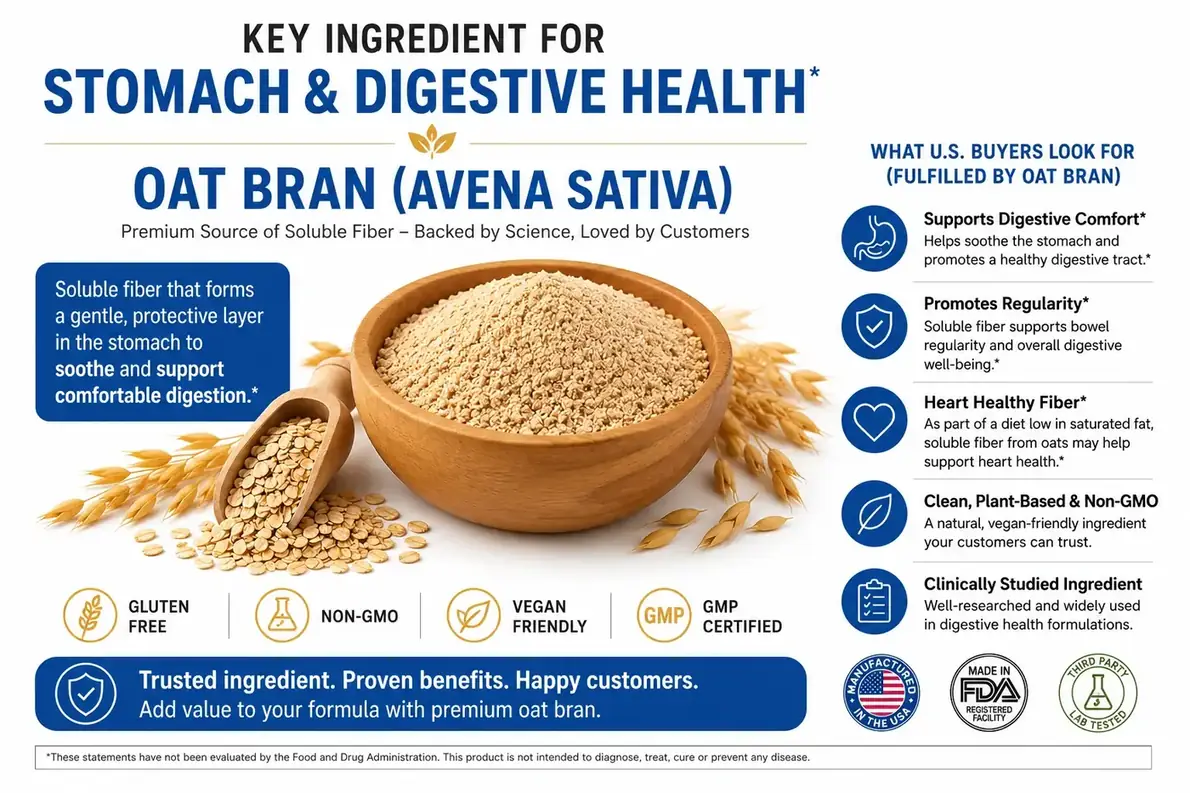
Here is the honest hierarchy, and it is where we have to be clear about what our own product is. FloraNew is a prebiotic-fibre blend — psyllium, oat bran, apple pectin and flaxseed — not a probiotic. That distinction is the whole point. Probiotics add bacteria; prebiotic fibre feeds the beneficial bacteria your gut already hosts. The two are complementary, and the best regularity and comfort strains belong to the very Bifidobacteria that prebiotic fibre nourishes. Feeding the bacteria you want more of is working with the same biology from the opposite direction.
Fibre and fluid are also the first-line, evidence-backed levers for everyday bloating, and psyllium in particular has strong clinical support. If your fibre intake is low — as it is for most women — adding a gentle daily prebiotic fibre is often the highest-value first move, with a named probiotic strain layered on top. Hold FloraNew to realistic expectations: it is a daily fibre top-up with a 60-day guarantee, not an overnight debloat and not a probiotic. If that fits what you are looking for, and if you would rather build the foundation before chasing strains, that is exactly where it belongs. To compare fibre types first, our guide to which fibre actually helps bloating, soluble versus insoluble, is the natural next read.

Frequently asked questions
Do probiotics actually reduce bloating in women?
Often, yes, but the effect is modest and depends heavily on the strain. In a review of more than 60 trials, roughly 60% of IBS patients reported meaningful relief from bloating and gas when they took a targeted probiotic. The keyword is targeted: a random blend with no named, tested strains is far less likely to help than one built around strains studied for exactly this problem.
Which probiotic strains work best for bloating?
The strongest randomised evidence points to Bifidobacterium longum 35624, Lactobacillus plantarum 299v and Bacillus coagulans. Each has been studied specifically for bloating, gas and abdominal discomfort. Because benefit is strain-specific rather than species-specific, the label should list the full strain code, not just a species name or a large colony-count number.
Can probiotics make bloating worse before it gets better?
Yes, and it is common. A little extra gas or bloating in the first one to three weeks is a normal part of the gut adjusting as the microbial balance shifts. For most people it settles as the microbiome adapts. Starting with a lower dose and taking it consistently with food usually smooths the transition.
How fast should probiotics ease bloating?
Think in weeks, not days. Most trials measured results after two to four weeks of daily use, and a fair personal trial is a full month with the same strain. If bloating has not improved after about four weeks of consistent use, that strain is probably not the right one for you and it is reasonable to change approach.