Probiotics for SIBO: What Women Should Know
Can probiotics treat SIBO in women?
Probiotics are not a primary treatment for SIBO. Their realistic role is symptom management and microbiome resilience, not eradicating the overgrowth. Some strains can worsen gas and bloating, so soil-based or single-strain options are often better tolerated. SIBO needs breath-test diagnosis and clinician-guided care first.
- Probiotics support the gut ecosystem; they do not eradicate small intestinal bacterial overgrowth.
- Some fermentable strains worsen bloating in SIBO, so spore-based or single-strain formulas are often better tolerated.
- Diagnosis comes first: a hydrogen and methane breath test, read by a clinician, guides what to try.
If you have been searching for probiotics for SIBO, you are almost certainly juggling two things at once: a belly that swells within an hour of eating, and a feed full of confident advice that flatly contradicts itself. One post swears a high-count multi-strain capsule was the turning point; the next warns that the same product left them doubled over. Both can be telling the truth, because SIBO is one of the few gut conditions where the same probiotic genuinely helps one woman and harms another. This article is written for that confusion. We will be honest about where probiotics fit, where they do not, and why the first move is never a supplement at all.
SIBO — small intestinal bacterial overgrowth — is more common in women, partly because of slower gut transit, hormonal shifts across the cycle, and a higher rate of overlapping conditions like IBS. That backdrop matters, because it means bloating alone is a terrible way to diagnose yourself. Let us start with what SIBO actually is, then work carefully through the probiotic question.
What SIBO actually is
Your large intestine is supposed to be densely populated with bacteria. Your small intestine is not. It is where most nutrient absorption happens, and it normally keeps bacterial numbers low using a combination of stomach acid, bile, a one-way valve at the far end, and a housekeeping wave called the migrating motor complex that sweeps the small bowel clean between meals. SIBO is what happens when that system falters and bacteria accumulate where they should be sparse.
The trouble is fermentation. When bacteria sit in the small intestine and meet the carbohydrates you eat, they ferment them early, producing hydrogen or methane gas high up in the digestive tract. That gas is what drives the hallmark SIBO experience: rapid bloating after meals, visible distension, cramping, and either loose stools (more common with hydrogen) or stubborn constipation (more common with methane, now often called intestinal methanogen overgrowth). Because the mechanism is fermentation, anything that adds fermentable material or fermenting organisms can, in principle, feed the fire. Hold that thought — it is the entire reason probiotics are a double-edged tool here.
Do probiotics for SIBO help or hurt?
Here is the honest headline: the research on probiotics for SIBO is mixed, modest, and not strong enough for anyone to promise you a result. Some studies and reviews suggest certain probiotics may help reduce hydrogen levels and ease symptoms; others show no benefit, and a subset of people clearly feel worse. Crucially, probiotics are not classed as a primary way to reduce the overgrowth itself. That job belongs to clinician-directed care, which may include prescribed options and a structured plan after testing. Anyone selling a probiotic as a SIBO cure is overselling it.
So what is the realistic role? Two things. First, symptom support — for some women, the right formula seems to steady digestion and reduce day-to-day gas and urgency. Second, microbiome resilience — helping the broader ecosystem recover after the overgrowth is being addressed, so the gut is more robust going forward. Both are supportive, adjunct roles. Neither is eradication. If you keep that frame, you will make far better decisions than the "just take more CFUs" crowd.
May help vs may worsen: a realistic view
| Situation | May help | May worsen |
|---|---|---|
| Formula type | Single-strain or spore-based (soil-based) | Large multi-strain, very high-CFU blends |
| Added yeast | Saccharomyces boulardii (adds no bacterial load) | Products packed with prebiotic sugars you react to |
| Timing | Introduced after diagnosis, low and slow | Started blindly at full dose during a flare |
| Fibre alongside | Gentle soluble fibre, titrated to tolerance | A sudden jump in fermentable fibre |
Read that table as a map, not a promise. The right-hand column is not "these are bad" — it is "these are the choices most likely to backfire in an actively overgrown small intestine." Tolerance is personal, and the only reliable test is a careful, tracked trial once you know what you are dealing with.
Why some probiotics make SIBO symptoms worse
It sounds paradoxical that a "good bacteria" supplement could increase bloating, but the logic is simple. If your small intestine is already over-colonised, some probiotic organisms may add to the fermentation load, especially the more gas-producing species and especially at very high counts. On top of that, many probiotic products include prebiotic fibres or sugars such as inulin or fructooligosaccharides as fillers or as intentional "food" for the bacteria. In a healthy colon that is a feature; in SIBO it can be the very thing that triggers a flare, because you are delivering rapidly fermentable material to bacteria in the wrong place.
There is also the D-lactate discussion. Certain Lactobacillus-heavy blends have been linked in some reports to symptoms in susceptible people, which is part of why clinicians sometimes steer toward spore-based formulas or a beneficial yeast instead. The takeaway is not to fear all probiotics — it is to respect that in SIBO, more strains and more CFUs is not automatically better, and the "worse before better" reasoning people apply to detoxes does not apply here. If a product reliably makes you feel worse for weeks, that is information, not a healing crisis.
Which probiotics tend to be better tolerated
No formula is right for everyone, but patterns emerge in clinical practice and patient reports. Spore-based (soil-based) probiotics — typically Bacillus species — are frequently better tolerated because they are more transient and less likely to add persistent fermentation in the small bowel. Saccharomyces boulardii, a beneficial yeast, is popular precisely because it is not a bacterium, so it cannot contribute to bacterial overgrowth while still offering gut support. And simple single-strain products let you isolate what your gut actually agrees with, which a twelve-strain blend makes impossible.
Whatever you try, the method matters more than the marketing: start at a low dose, hold it for several days, and keep a short daily note of bloating, gas, and stool pattern. If a strain suits you, you will usually know within two to three weeks. This measured approach is the same one that separates people who make progress from people who cycle through eight products and conclude "nothing works." For a broader look at strain selection in overlapping gut conditions, our guide to the best-tolerated probiotics for IBS in women covers the same low-and-slow principle in more depth.
Where prebiotic fibre — and FloraNew — actually fit
This is the part most SIBO content gets wrong in one direction or the other. One camp tells you to strip out all fibre forever; the other tells you to load up on prebiotics immediately. The honest answer sits between them and depends on timing. During an active, undiagnosed flare, aggressively adding fermentable fibre is exactly the wrong move. But once SIBO is being managed under clinician guidance, the long-term goal is a resilient, diverse microbiome — and that ecosystem is built and maintained on fibre. Cutting it out indefinitely tends to reduce diversity, which is not where you want to end up.
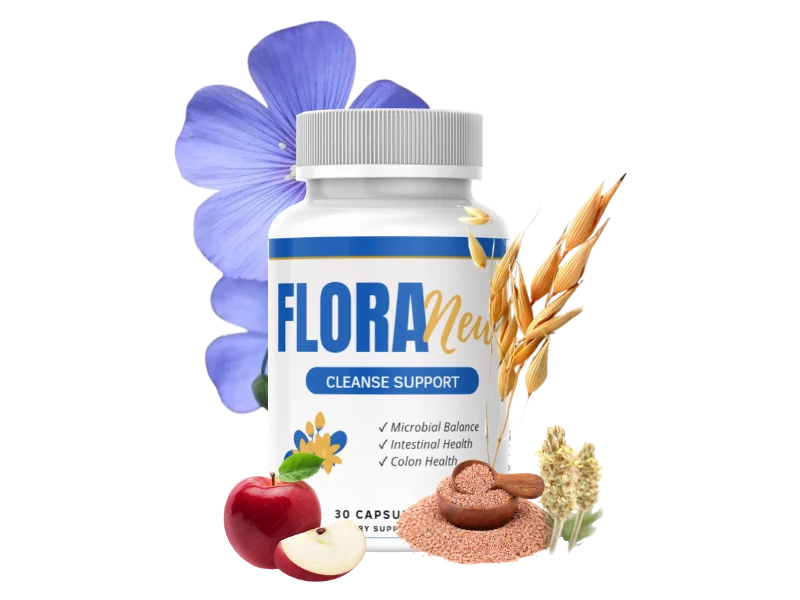
That is the specific, limited niche FloraNew is honest about occupying. FloraNew is not a probiotic and does not claim to treat SIBO. It is a gentle daily blend of soluble fibres — psyllium, oat bran, apple pectin and flaxseed — the kind of "food" that supports a balanced gut ecosystem rather than adding bacteria to it. For a woman who has moved past the acute phase and wants to rebuild fibre intake carefully, a single measured capsule taken with plenty of water is a controllable way to do that: you can titrate slowly and stop if it does not agree with you, which is much harder to do with fibre scattered across meals. You can see exactly what is inside on the FloraNew ingredients page, with official-store pricing here.
See FloraNew prebiotic fibre → Order Now
Three myths worth retiring
Myth 1: "Probiotics will clear my SIBO." They will not eradicate the overgrowth, and no reputable source claims they do. Their value is supportive — symptoms and resilience — not curative. Expecting eradication from a probiotic is the fastest route to disappointment and wasted money.
Myth 2: "If some is good, a mega-dose multi-strain is better." In SIBO the opposite is often true. High CFUs and many species can mean more fermentation in the wrong place. Simpler and lower is frequently the more comfortable starting point, which is the reverse of how these products are usually marketed.
Myth 3: "I should avoid all fibre for good." Short-term care may temporarily reduce fermentable carbs, but a permanent fibre-free diet works against long-term microbiome diversity. The skill is timing and titration — when to pull back and when, and how gently, to rebuild. Our overview of why digestion slows in women explains how fibre and transit interact once you are past a flare.
How SIBO is diagnosed before you try anything
Because bloating, gas and irregularity have a long list of possible causes — from ordinary constipation to food intolerance to hormonal fluctuation — guessing "it must be SIBO" from symptoms is unreliable. The standard assessment is a hydrogen and methane breath test: you drink a measured sugar solution (usually lactulose or glucose) and breath samples are collected over a couple of hours to see whether and when gas rises. A clinician interprets the curve alongside your history, because the numbers alone do not tell the whole story.
Getting that clarity first is not a bureaucratic hurdle; it is what makes everything downstream smarter. If it turns out you have methane-predominant overgrowth, the tolerance profile and the plan differ from hydrogen-predominant SIBO. If it turns out you do not have SIBO at all, you have just saved yourself a frustrating and possibly counterproductive experiment. This is also the moment to compare tools sensibly — for instance, whether your symptoms point more toward enzyme support or bacterial support, a distinction we unpack in digestive enzymes versus probiotics for women.
A sensible, honest way forward
If you suspect SIBO, the order of operations is: get assessed, follow clinician-guided care to address any overgrowth, and only then consider probiotics and fibre as supportive, resilience-building tools — introduced one at a time, low and slow, and tracked. Treat any product that promises to "eradicate SIBO" with suspicion, and treat your own symptom diary as the most reliable data you have. Progress in SIBO is usually unglamorous and stepwise, not a single miracle capsule.
FloraNew's place in that plan is deliberately modest: a gentle, titratable soluble-fibre top-up for the rebuilding phase, not a treatment and not a probiotic. Kept in that lane, it is a reasonable tool. Pushed beyond it, no supplement is. That honesty is the whole point — you deserve a realistic map, not another over-promise.
Frequently asked questions
Can probiotics treat SIBO?
No. Probiotics are not a primary treatment for SIBO, which is small intestinal bacterial overgrowth. The evidence-based options for reducing the overgrowth are directed by a clinician, usually after a breath test. Probiotics are best viewed as supportive: they may help with symptoms and microbiome resilience for some people, but they do not eradicate the overgrowth and can make symptoms worse in others.
Do probiotics make SIBO worse?
They can. Because SIBO involves too many bacteria in the small intestine, adding fermentable organisms or feeding them can increase gas, bloating and cramping in some people. Reactions are individual and strain-specific. Many people tolerate single-strain or spore-based (soil-based) formulas better than high-count multi-strain blends, but the only way to know is a cautious, clinician-guided trial.
Which probiotics are best tolerated with SIBO?
There is no universal answer, but spore-based (soil-based) formulas, Saccharomyces boulardii (a beneficial yeast that does not add to bacterial load), and simple single-strain products are often better tolerated than large multi-strain, high-CFU blends. Start low, go slow, and track your own gas and bloating so you can tell what actually agrees with you.
How is SIBO diagnosed before trying probiotics?
SIBO is usually assessed with a hydrogen and methane breath test after drinking a sugar solution, interpreted by a clinician alongside your symptoms and history. Because bloating and irregularity have many causes, self-diagnosing SIBO from symptoms alone is unreliable. Getting a proper diagnosis first means any probiotic or fibre you try is chosen to fit your actual picture.
Rebuilding fibre gently after a flare?
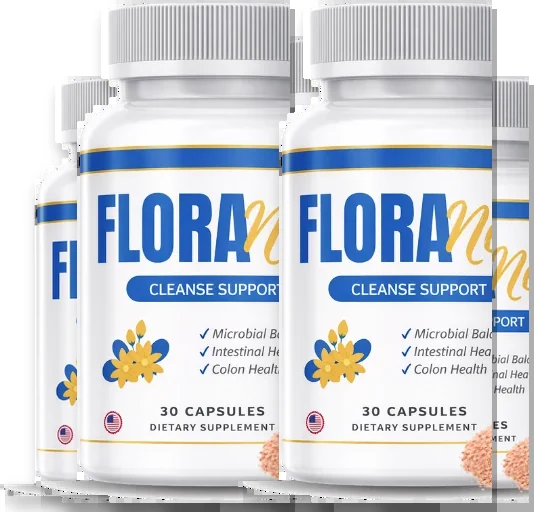
FloraNew pairs psyllium, oat bran, apple pectin and flaxseed in one vegetarian capsule — a titratable way to support a balanced gut ecosystem, backed by a 60-day guarantee. It is not a probiotic and not a SIBO treatment.
Order Now